Biological Computation
An example of an actual commercial hardware implementation is Cortical Labs' CL1, a system that integrates living human brain cells on a silicon microelectrode array to process information.
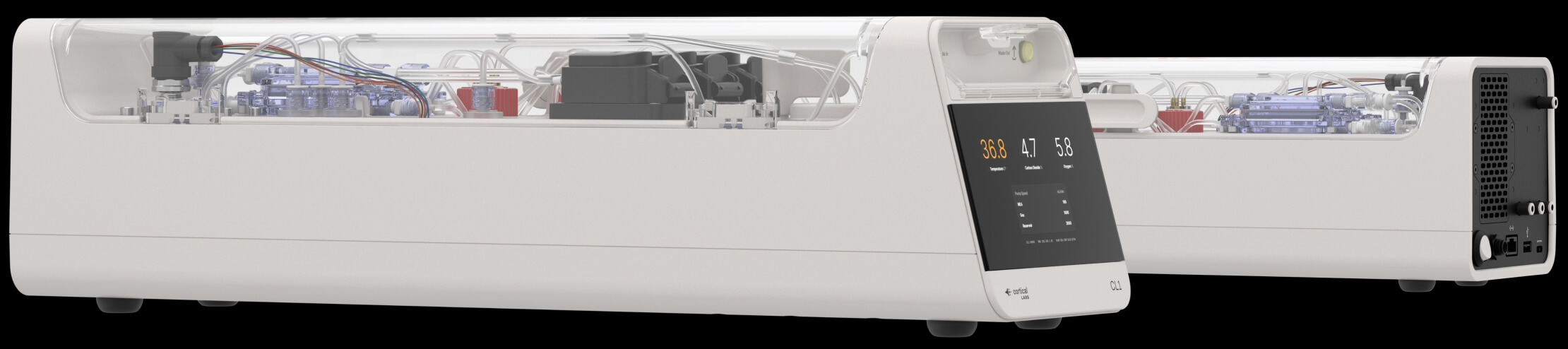
While early hardware prototypes and cloud testbeds are currently available in specialized research settings, production-ready biological computing systems are expected to reach commercial enterprise deployment by late 2030. The primary operational challenge for regular users is the availability of consumables required to keep these biological computers running continuously over time.
These systems compete directly with quantum computing by offering massive data-storage density and extreme energy efficiency at room temperature, though they operate at slower processing speeds. Unlike quantum machines that require million-dollar cryogenic cooling units, biological computers are cheaper to house initially but demand continuous spending on organic maintenance. Software development for biocomputers is currently primitive, relying on wet-lab bioengineering protocols rather than the established programming frameworks and cloud APIs emerging for quantum systems.
Monitoring both quantum and biological computing allows enterprises to prepare for post-silicon disruption, protect encryption against future quantum threats, and exploit unprecedented efficiency in drug discovery or data processing. Tracking their evolution ensures leaders can invest strategically before competitors capture first-mover advantages or lock in proprietary platforms.
See more at Wikipedia.